The U.S. Makes Its Visa Bond Program Permanent. Here's What You Need to Know.
If you're from certain countries and plan to apply for a U.S. visitor visa, there's an important policy change you should be aware of.
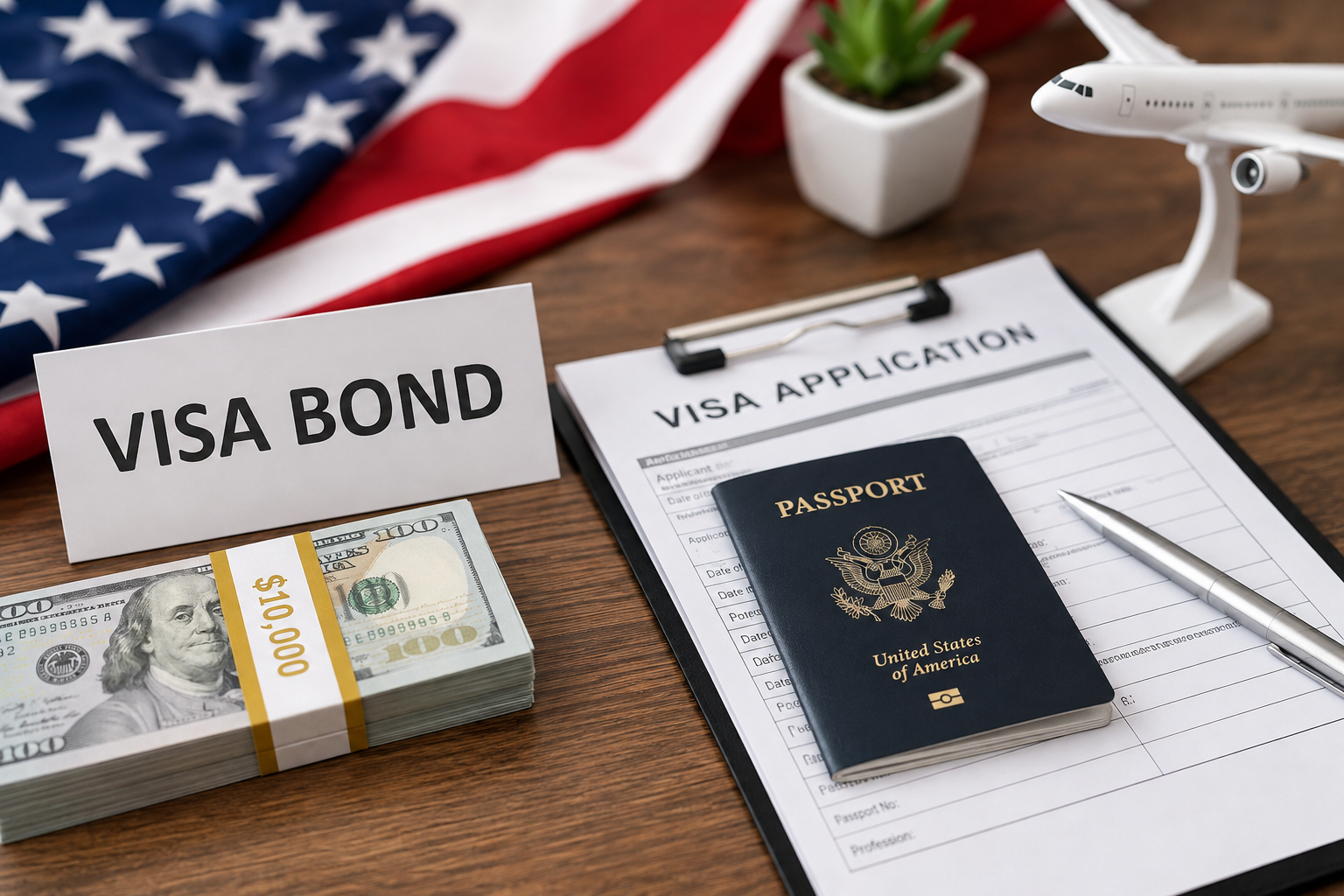
The U.S. Department of State has officially made its visa bond program permanent, meaning some applicants for B-1 (business) and B-2 (tourist) visas may now be required to post a refundable bond of up to $20,000 before their visa is issued.
The program began as a pilot in 2025, but the government has now decided to make it a permanent part of the visa process. According to the State Department, the policy is intended to reduce visa overstays. Critics, however, argue that it creates an additional financial barrier for legitimate travelers.
So, what exactly is a visa bond?
Think of it like a security deposit.
If a consular officer determines that a bond is appropriate, the applicant must pay a refundable amount before the visa is issued. If the traveler follows the terms of their admission and leaves the United States on time, the bond is generally returned. If they overstay or violate the terms of their visa, they risk losing some or all of that money.
The bond amounts can be:
$10,000
$15,000
Up to $20,000
Who does this affect?
Not everyone.
The program applies only to B-1 (business) and B-2 (tourist) visa applicants who are nationals of 50 designated countries. The majority of those countries are in Africa, although the list also includes countries in Asia, the Caribbean, the Pacific, and Latin America.
Some of the countries currently on the list include:
Africa: Algeria, Angola, Benin, Botswana, Burundi, Cabo Verde, Côte d'Ivoire, Djibouti, Ethiopia, Gabon, The Gambia, Guinea, Guinea-Bissau, Lesotho, Malawi, Mauritania, Mauritius, Mozambique, Namibia, Nigeria, Senegal, Seychelles, Tanzania, Togo, Tunisia, Uganda, Zambia, Zimbabwe, and others.
Asia: Bangladesh, Bhutan, Cambodia, Kyrgyz Republic, Mongolia, Nepal, Tajikistan, Turkmenistan.
Caribbean & Latin America: Antigua and Barbuda, Cuba, Dominica, Grenada, Nicaragua, Venezuela.
Pacific: Fiji, Papua New Guinea, Tonga, Tuvalu, Vanuatu.
Other: Georgia.
The Department of State can add or remove countries from this list over time based on factors such as visa overstay rates and other immigration-related data.
How is the bond amount determined?
Under the permanent rule, the bond may be $10,000, $15,000, or $20,000. Unlike the pilot program, the new rule eliminated the lowest $5,000 option and increased the maximum bond amount to $20,000.
The amount is not automatically based on your country or your income. Instead, it is determined by the consular officer during your visa interview after reviewing your application and evaluating whether a bond should be required. The Department of State has not published a formula explaining how officers decide between the three bond amounts, giving consular officers broad discretion to make that determination on a case-by-case basis.
If a bond is required, it may be paid either by the applicant or by a third party, such as a family member, friend, or business associate. If the traveler complies with the terms of their visa and departs the United States as required, the bond is generally refundable.
Why this matters
On its face, the program is intended to reduce visa overstays by requiring certain travelers to put down a refundable financial bond before entering the United States.
But in practice, a bond of $10,000 to $20,000 is simply out of reach for many families. Even if the money is eventually refunded, most people don't have that kind of cash sitting in a bank account to tie up while they travel.
That means some people who fully intend to follow the law may never even apply for a visa.
The bigger picture
Whether you agree with the policy or not, it's likely to have consequences beyond immigration enforcement.
During the pilot program, nearly half of the applicants who were asked to post a bond chose not to pay it. As a result, the number of business and tourist visas issued to citizens of the affected countries declined by an astonishing 83%.
That statistic tells an important story. While the government views the program as a successful way to reduce visa overstays, it also appears to have dramatically reduced legitimate travel to the United States.
For many families, it could mean missing weddings, graduations, funerals, or the opportunity to visit loved ones.
For businesses, it may discourage international travel for meetings, conferences, trade shows, and other business opportunities.
It may also have a significant impact on the U.S. tourism industry. International visitors contribute billions of dollars to the U.S. economy every year by staying in hotels, eating at restaurants, shopping at local businesses, visiting national parks, attending sporting events, and supporting countless jobs across the country. Policies that make travel to the United States significantly more expensive or financially out of reach for legitimate visitors can have ripple effects that extend far beyond immigration enforcement.
Like many immigration policies, there's a balance to be struck. The government has a legitimate interest in encouraging compliance with immigration laws, but it's also worth asking whether requiring refundable bonds of up to $20,000 is the right solution if it discourages legitimate visitors from coming to the United States in the first place.
Will this affect my clients?
For the most part, no.
The majority of Action Sports Law Group clients travel to the United States on O and P visas, so this policy generally won't apply to them. However, it's important to keep people informed about changes in U.S. immigration policy because they shape how the United States is viewed as a destination for tourism, business, sports, and cultural exchange. It could also affect friends and family of our clients who are coming to visit the U.S.
Immigration law is constantly evolving, and not every policy change makes headlines. We will continue sharing updates we feel are important, because staying informed helps all of us better understand the direction of U.S. immigration policy.